
Excavation Volume Calculator UK – Soil, Trench & Foundation Estimator Guide
A complete guide to calculating excavation volume for trenches, foundations, and footings. Learn how to measure soil removal, apply bulking factors, and estimate spoil volume accurately.
Use this UK-ready calculator and guide to size trench and foundation digs, convert in-situ volume to loose spoil with realistic bulking factors, and plan skips or lorry loads. Supports metric and imperial with clear examples and tables.
Recommended Tools & Materials for Excavation, Soil & Foundation Work
These essential tools and materials help with soil removal, trench digging, and foundation preparation. Each link opens in a new tab.
- Heavy-Duty Shovels & Spades – Travis Perkins – perfect for digging trenches, footings, and small excavation areas.
- Wheelbarrows & Barrows – Travis Perkins – ideal for moving excavated soil or ballast on-site.
- Laser Levels & Site Levels – Amazon – maintain accurate depths and falls during excavation.
- Builders String Lines & Pegs – Amazon – mark out trench lines and foundation boundaries precisely.
- MOT Type 1 Hardcore – Travis Perkins – ideal for backfilling or compacted base layers before concrete.
Affiliate Disclosure: Some links above are affiliate links. If you buy through them, SmartBuildCalc may earn a small commission at no extra cost to you. This helps keep our calculators and guides free to use.
How the Excavation Calculator Works
The calculator multiplies your entered length × width × depth to calculate the in-situ (undisturbed) soil volume. You can then apply a bulking factor — which accounts for soil expansion after digging — to estimate the loose spoil volume.
Enter your trench or footing dimensions to see results instantly in cubic metres, feet, or yards.
Understanding Soil Bulking Factors
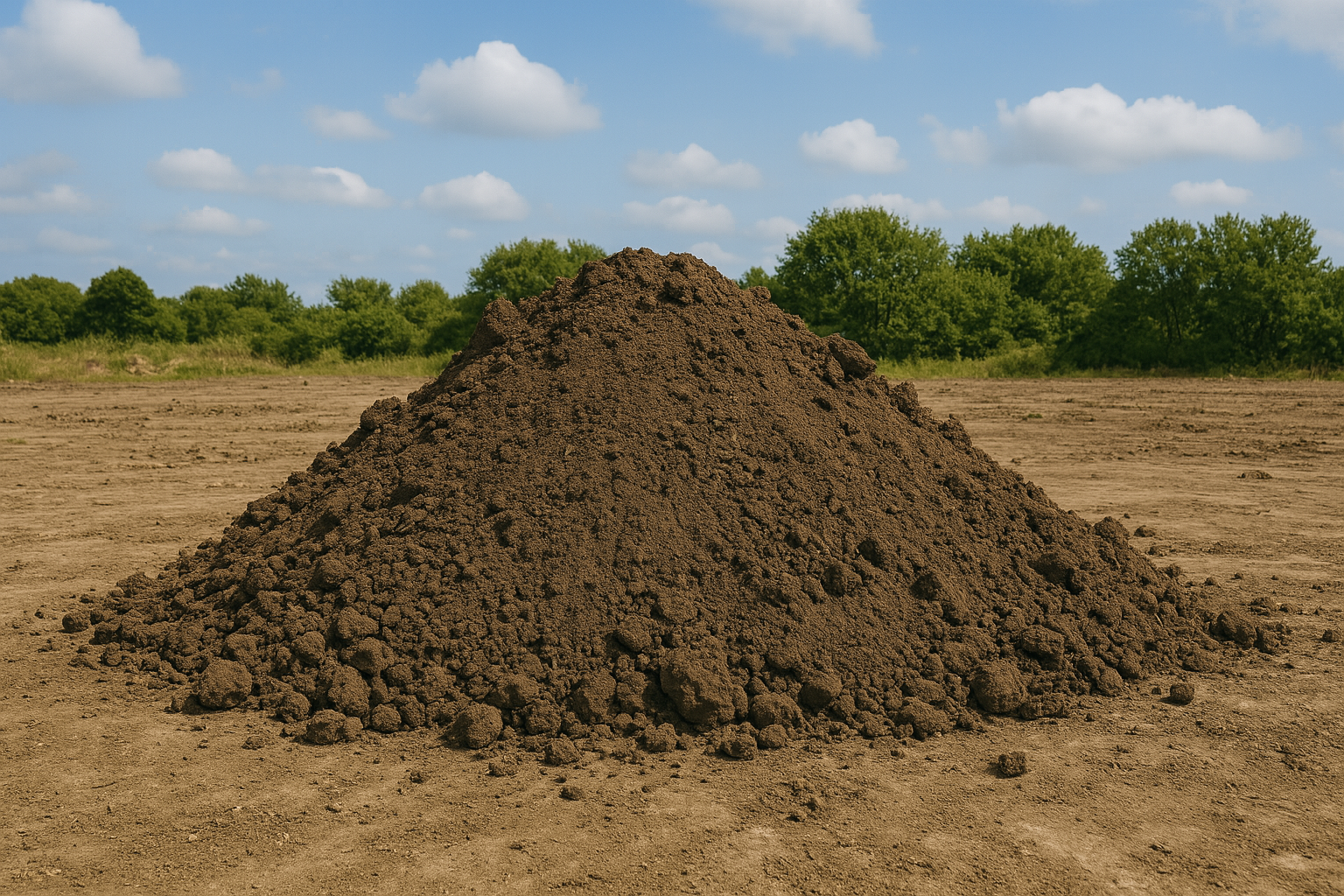
When soil is excavated, it breaks apart and air fills the spaces between particles, causing the volume to increase. This is known as bulking or swell. Failing to include this can lead to underestimating waste and haulage needs.
| Soil Type | Typical Bulking Factor (%) | Notes |
|---|---|---|
| Clay (wet) | 25–30% | High expansion; heavy when saturated. |
| Sandy Soil | 10–15% | Low cohesion; varies with moisture. |
| Topsoil | 15–25% | Organic content increases variability. |
| Gravel | 5–10% | Minimal expansion; compacts quickly. |
Example Excavation Calculation
Trench: 12 m long × 0.6 m wide × 0.8 m deep
Related Calculators
Before You Go
Plan your excavation based on soil type, weather, and access. Use the calculator to estimate spoil, then contact local haulage or skip providers with your loose volume figure. Protect exposed excavations from rain and edge collapse.
